
On this pageWhat are a bookkeeper’s main jobs?
- What are a bookkeeper’s main jobs?
- What does a bookkeeper do on a daily basis?
- What does a bookkeeper do for a small business?
- What does a bookkeeper need from their clients?
- What can a bookkeeper not do?
- What does a bookkeeper do vs an accountant?
- What does a virtual bookkeeper do?
- When should a small business hire a bookkeeper?
- How does Agile do the bookkeeping?
- Who can handle this?
- Questions people also ask
- A bookkeeper categorizes your transactions and reconciles your accounts.
- They keep receipts and documents organized and prepare your reports.
- A bookkeeper needs your source documents and a few answers from you.
- Accounting uses those records for statements, tax planning, analysis and advice.
- Get help when reports are late or transactions are piling up.
What are a bookkeeper’s main jobs?
A bookkeeper’s core work is four jobs, kept up all year. Bookkeeping records and organizes a business’s financial transactions:
- Categorizing transactions, so every deposit and payment lands in the right account
- Reconciling accounts, so your records match the bank
- Managing receipts and documents, so nothing goes missing
- Preparing reports that help you understand your numbers
The work is done in bookkeeping software, where each sale, bill and payment is recorded and sorted into a category. The reports come from that same record. A profit and loss statement shows what you earned and what you spent. A balance sheet shows what you own and what you owe.
What does a bookkeeper do on a daily basis?
Day to day, a bookkeeper records what came in and what went out, and matches each transaction to its proof. The work follows a rhythm:
- As transactions arrive, record each sale, bill and payment and sort it into the right category
- As documents arrive, attach the receipt, invoice or bill to its transaction
- Every month, reconcile, which means matching your books to your bank and credit card statements
- Every month, prepare the reports
- Through the year, keep the books ready for sales tax filings, payroll and year end
At Agile, we also file GST, HST and PST and handle payroll source deductions. See Managed Payroll.
What does a bookkeeper do for a small business?
For a small business, a bookkeeper does the record keeping so the owner doesn’t have to, and keeps the numbers current. Here is one month of bookkeeping for a shop:
- Sales from the till and the online store are recorded and matched to the deposits in the bank
- Supplier bills are entered, and each one is matched to its payment
- Receipts for rent and supplies are filed with their transactions
- The bank account and the credit card are reconciled to their statements
- Sales tax collected and paid is tracked, ready for the next filing
- A profit and loss statement and a balance sheet are prepared, so the owner can see how the month went
The same steps repeat every month. Bookkeeping is these steps, kept up all year. For the whole picture, read the small business bookkeeping guide.
What does a bookkeeper need from their clients?
A bookkeeper needs your source documents and answers to a few questions. Source documents are the proof behind each transaction:
- Bills from your suppliers
- Receipts for what you bought
- Invoices you sent to customers
- Bank and credit card statements
- Sale confirmation emails and other records of online transactions
The Canada Revenue Agency says business records must be reliable and complete, and supported by documents. The CRA’s page on what the law requires you to keep has the details.
It also helps to keep business and personal money apart. With a separate business bank account, every transaction your bookkeeper sees belongs to the business.
What can a bookkeeper not do?
Tax planning, financial analysis and advice are accounting work. Bookkeeping is the records they rely on.
Agile is a bookkeeping company, not an accounting firm. We don’t do year-end taxes. Your year-end accountant stays your income tax expert, and we send them a clean file.
What does a bookkeeper do vs an accountant?
A bookkeeper keeps day-to-day financial records accurate and organized. An accountant typically uses those records for financial statements, tax planning, analysis and advice.
Bookkeeping is the groundwork accounting builds on. Agile does the bookkeeping. Your year-end accountant works from the records we keep.
For the two side by side, read bookkeeping vs accounting.
What does a virtual bookkeeper do?
A virtual bookkeeper does the same work without working from your office. You share documents online instead of handing over a folder of paper.
When should a small business hire a bookkeeper?
Hire one when your books are behind or your time is going to admin. Other signs are:
- Reports are late
- Transactions are piling up
Keeping your own books takes two things: time and know-how. If you’re short on either, that is the time to hire.
How does Agile do the bookkeeping?
Your dedicated Agile accountant does your bookkeeping, and the Agile App keeps your transactions, documents, questions and reports in one place. CPAs manage the team and oversee the quality of your books.
We update your books every week and reconcile them every month, and we show you where you stand. You answer occasional questions and upload the documents we ask for.
If your books are up to date, see Monthly Bookkeeping. If they’re behind, see Catch-up Bookkeeping. When you’re ready, get a quote.
I can’t see my numbers. Who can handle this for me?
Your dedicated Agile accountant keeps your books up to date every week, and the Agile App shows you where you stand. CPAs manage the team and oversee the quality of your books.
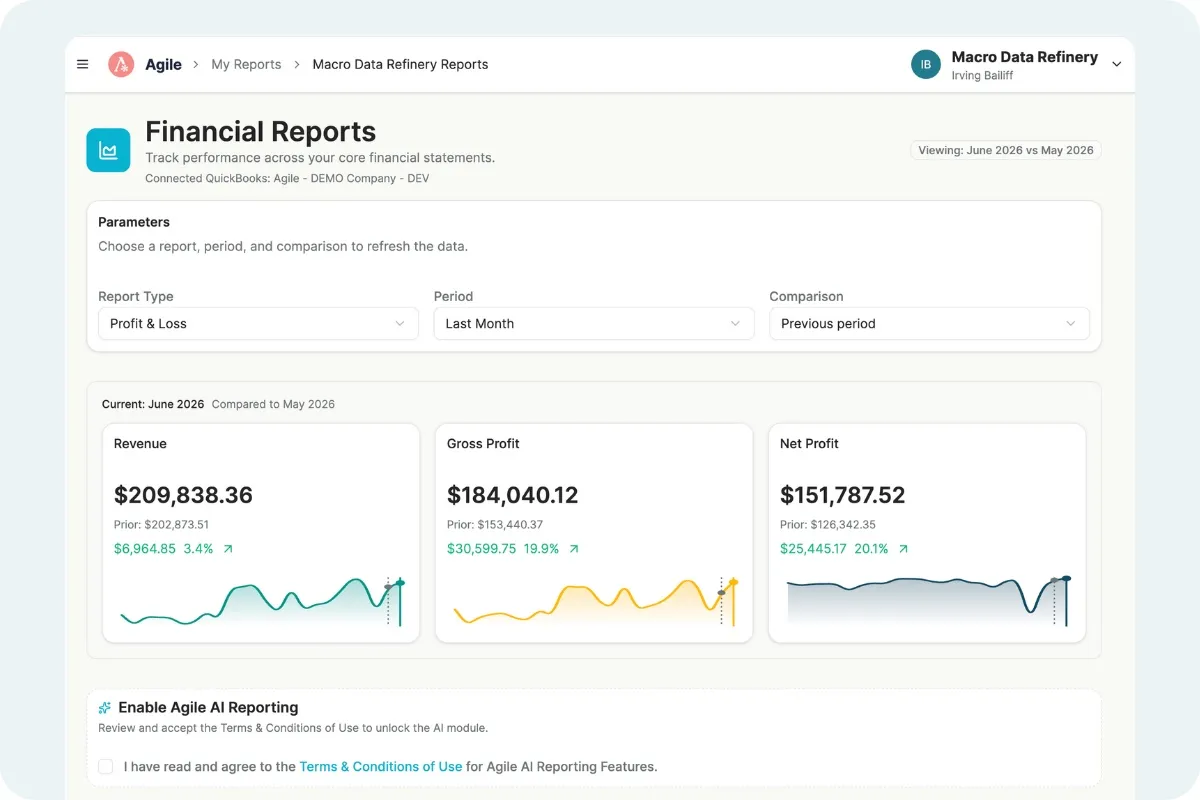
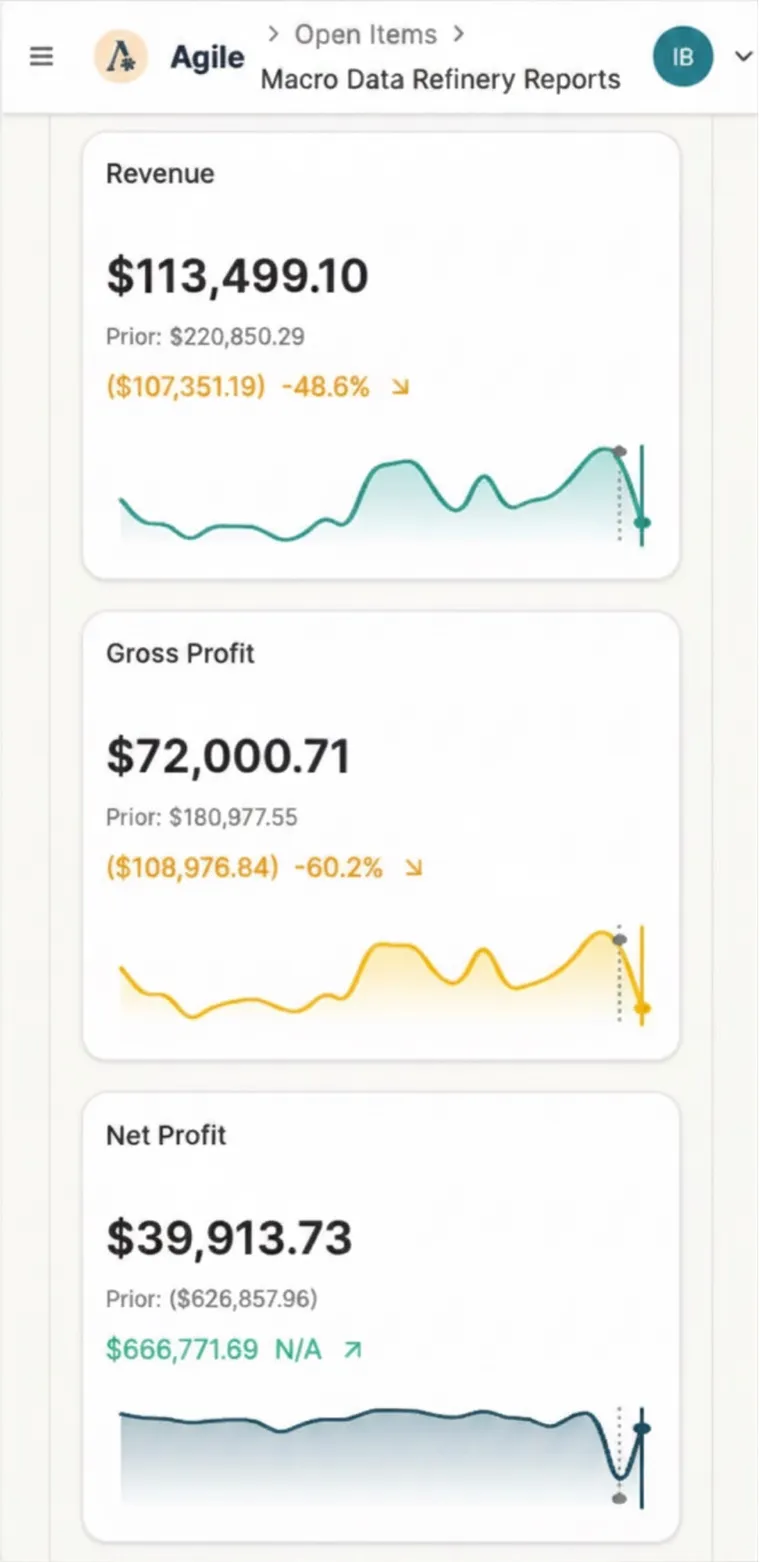
Being able to have weekly, up-to-date financials means everything when you are trying to make decisions in a business.
Questions people also ask
- What services do bookkeepers provide?
- Bookkeepers categorize transactions, reconcile bank and credit card accounts, manage receipts and documents, and prepare reports such as a profit and loss statement and a balance sheet. Agile also files GST, HST and PST and handles payroll source deductions.
- What does bookkeeping entail?
- Bookkeeping entails recording and organizing a business’s financial transactions. Each sale, bill and payment is recorded, sorted into a category, backed by a document and checked against the bank.
- What does a bookkeeper need from their clients?
- A bookkeeper needs your source documents: bills, receipts, invoices and bank statements.
- Does a bookkeeper do taxes?
- It depends on the tax. Agile files GST, HST and PST and handles payroll source deductions, but we don’t do year-end taxes. Your year-end accountant stays your income tax expert.
- What is the difference between a bookkeeper and an accountant?
- A bookkeeper keeps day-to-day financial records accurate and organized. An accountant typically uses those records for financial statements, tax planning, analysis and advice.
- When should a small business get bookkeeping help?
- When reports are late, books are behind, transactions are piling up, or you’re spending too much time on admin instead of running the business.
- Will I still have to manage my own books?
- No. We run your bookkeeping. Your part is the source documents and a few answers.
This article provides general educational information. It is not financial, tax or legal advice for a specific business.
Agile is a Canadian, CPA-led bookkeeping firm for owners and nonprofits, working since 2018. CPAs manage the team and oversee the quality of your books.






A 100% Canadian team of accounting experts.