
On this pageWhat is the difference between bookkeeping and accounting?
- What is the difference between bookkeeping and accounting?
- What is the difference between a bookkeeper and an accountant?
- What are the tasks of bookkeeping and accounting?
- Where do bookkeeping and accounting overlap?
- When do I need bookkeeping?
- When do I need accounting or tax support?
- Does a bookkeeper or an accountant do taxes?
- Do bookkeeping and accounting cost the same?
- How do clean books help my accountant?
- Who can handle this?
- Questions people also ask
- Bookkeeping is the day-to-day record keeping.
- Accounting uses the records for statements, tax planning, analysis and advice.
- Bookkeeping comes first, because accounting builds on it.
- Agile is a bookkeeping company. Your year-end accountant stays your income tax expert.
- Clean books make an accountant’s work easier.
What is the difference between bookkeeping and accounting?
Bookkeeping is the record keeping and accounting is what you do with the records. Bookkeeping records and organizes a business’s financial transactions. Accounting interprets those records. Here they are side by side:
| Compare | Bookkeeping | Accounting |
|---|---|---|
| What it is | Recording and organizing a business’s financial transactions | Interpreting those records |
| Main job | Keeps day-to-day financial records accurate and organized | Uses those records for financial statements, tax planning, analysis and advice |
| Typical tasks | Categorizing transactions, reconciling accounts (matching your books to your bank), managing receipts and documents, preparing reports | Financial statements, tax planning, analysis and advice |
| Output | Current books and reports that show where you stand | Year-end financial statements, tax planning and advice |
| When you need it | All year, as soon as you have transactions to keep track of | When you need your numbers worked out, for tax time or a big decision |
| Who handles it with Agile | Agile does this | Your year-end accountant does this |
What is the difference between a bookkeeper and an accountant?
A bookkeeper keeps the records and an accountant interprets them. An accountant typically uses those records for financial statements, tax planning, analysis and advice.
A bookkeeper’s work runs all through the year, one transaction at a time. An accountant’s work builds on those records.
For the full list of a bookkeeper’s tasks, read what a bookkeeper does.
What are the tasks of bookkeeping and accounting?
Bookkeeping tasks build the record, and accounting tasks use it.
Bookkeeping tasks
- Categorizing transactions, so every deposit and payment lands in the right account
- Reconciling, which means matching your books to your bank and card statements
- Managing receipts and documents
- Preparing reports that help you understand your numbers
Accounting tasks
- Preparing financial statements
- Tax planning
- Financial analysis, which means working out what your numbers mean
- Advice based on your numbers
Where do bookkeeping and accounting overlap?
They overlap at the books themselves. A bookkeeper and an accountant work from the same records.
When the transactions are categorized and the accounts are reconciled, the accountant can start from numbers that are ready to use.
When do I need bookkeeping?
You need bookkeeping as soon as your business has transactions to keep track of. Get help when:
- Reports are late
- Books are behind
- Transactions are piling up
- Admin is taking time from running the business
Bookkeeping comes first as a business grows. At the start, the record keeping is small. As sales, bills and staff add up, it grows with them, and that is a good time to hand it over. Monthly Bookkeeping keeps your books current, and Catch-up Bookkeeping is there if they’re behind.
When do I need accounting or tax support?
You need accounting when it’s time for tax planning, financial analysis or advice. Agile is a bookkeeping company and doesn’t do year-end taxes.
Your year-end accountant stays your income tax expert. We send them a clean file.
Agile keeps your books. Your year-end accountant works from the records we keep.
Does a bookkeeper or an accountant do taxes?
An accountant typically handles tax planning, and a bookkeeper keeps the records tax is worked out from. At Agile, we file GST, HST and PST and handle payroll source deductions. We don’t do year-end taxes.
Our part is to keep the books current all year, so the file your year-end accountant gets is clean. If you’d like payroll looked after too, see Managed Payroll.
Do bookkeeping and accounting cost the same?
No. Bookkeeping and accounting are different work, and they are priced differently. For bookkeeping with Agile, get a quote.
How do clean books help my accountant?
With your transactions categorized and your accounts reconciled, the file we send your accountant is ready to use.
Your dedicated Agile accountant keeps your books current every week. CPAs manage the team and oversee the quality of your books.
I can’t see my numbers. Who can handle this for me?
Your dedicated Agile accountant keeps your books up to date every week, and the Agile App shows you where you stand. CPAs manage the team and oversee the quality of your books.
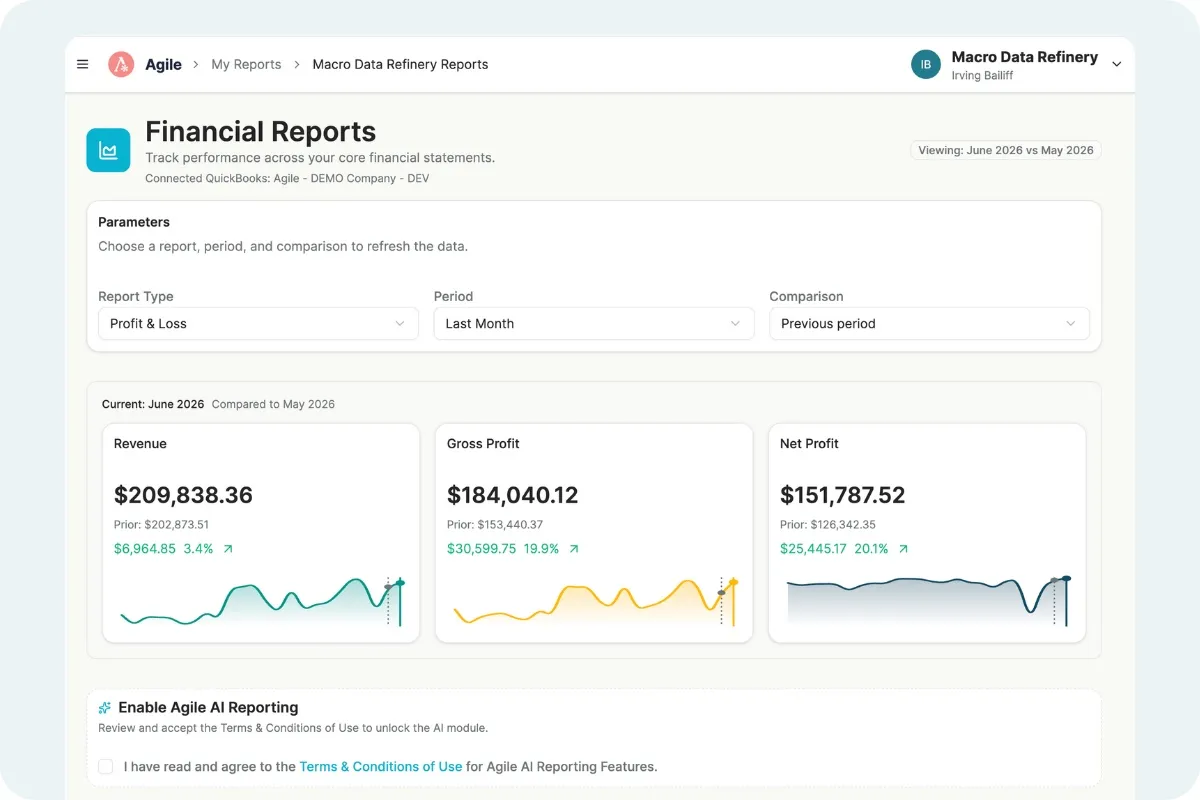
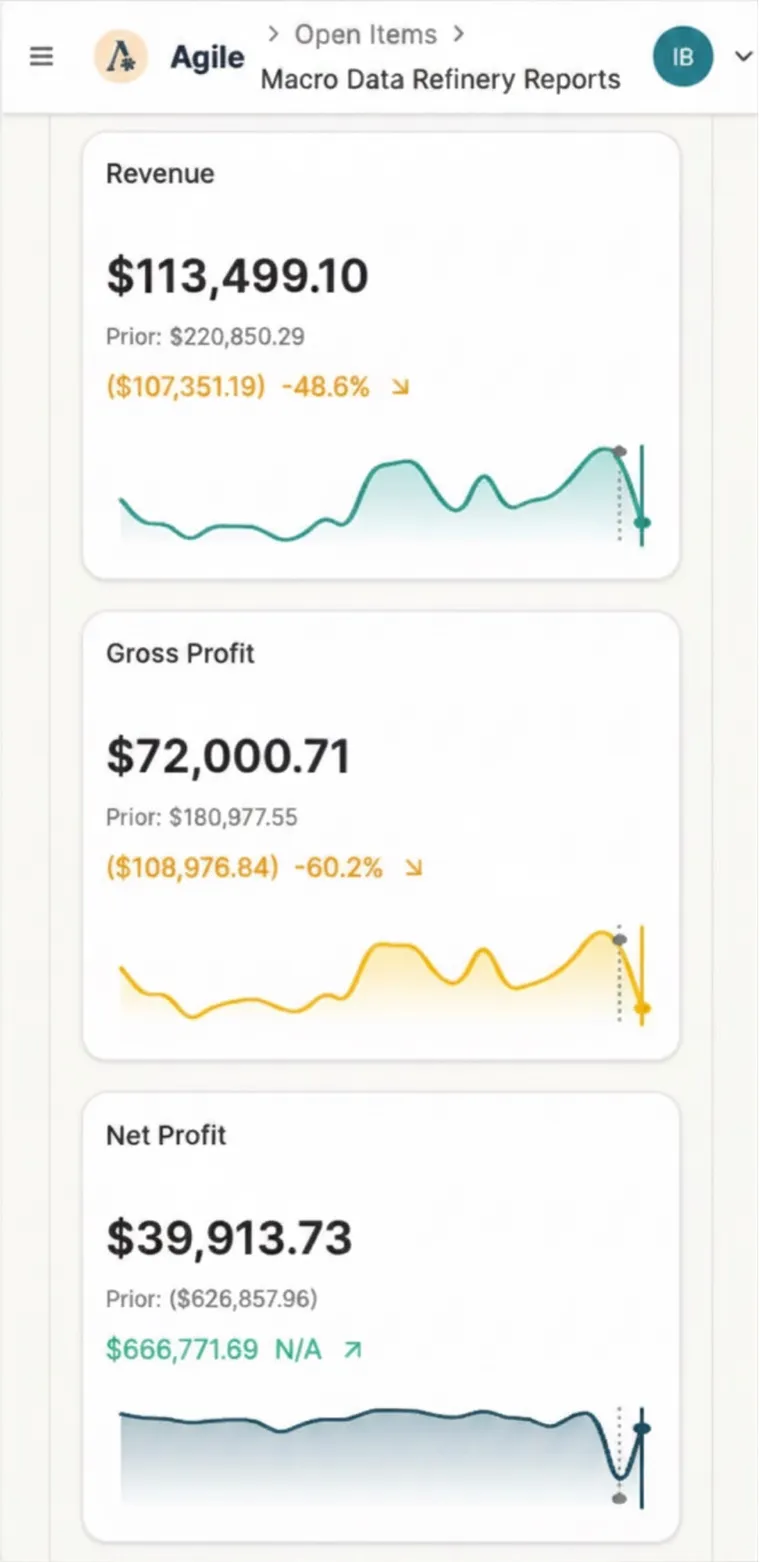
Being able to have weekly, up-to-date financials means everything when you are trying to make decisions in a business.
Questions people also ask
- Is bookkeeping the same as accounting?
- No. Bookkeeping records and organizes a business’s financial transactions. Accounting interprets those records for financial statements, tax planning, analysis and advice.
- What is the difference between a bookkeeper and an accountant?
- A bookkeeper keeps day-to-day financial records accurate and organized. An accountant typically uses those records for financial statements, tax planning, analysis and advice.
- Do I need a bookkeeper or an accountant?
- You need bookkeeping as soon as your business has transactions to keep track of, and accounting when it’s time for tax planning, financial analysis or advice. The two work together, because accounting builds on the books.
- What is the difference between a CPA and a bookkeeper?
- A bookkeeper keeps the day-to-day financial records. An accountant uses those records for statements, tax planning and advice, and a CPA is one type of accountant. At Agile, CPAs manage the team and oversee the quality of your books.
- What is the difference between a controller and a bookkeeper?
- A bookkeeper records and organizes the transactions. A controller is the person who oversees a company’s accounting and financial reporting.
- Is Agile an accounting firm?
- No. Agile is a bookkeeping company. Your year-end accountant stays your income tax expert, and we send them a clean file.
- When should a small business get bookkeeping help?
- When reports are late, books are behind, transactions are piling up, or you’re spending too much time on admin instead of running the business.
This article provides general educational information. It is not financial, tax or legal advice for a specific business.
Agile is a Canadian, CPA-led bookkeeping firm for owners and nonprofits, working since 2018. CPAs manage the team and oversee the quality of your books.






A 100% Canadian team of accounting experts.