
On this pageWhat is small business bookkeeping?
- What is small business bookkeeping?
- What does bookkeeping include?
- Why does a small business need bookkeeping?
- How do I set up basic bookkeeping for a small business?
- What are cash and accrual, single-entry and double-entry bookkeeping?
- What is on a monthly bookkeeping checklist?
- How does bookkeeping work for a sole proprietorship or a service business?
- How long do I need to keep business records in Canada?
- What are the common bookkeeping mistakes?
- When should I hire bookkeeping help?
- Who can handle this?
- Questions people also ask
- Transactions are categorized and accounts are reconciled.
- Documents are organized and reports are ready every month.
- A separate business bank account keeps business and personal money apart.
- The CRA generally requires you to keep records for six years.
- Falling behind is a common problem.
- Get help when reports are late or transactions are piling up.
What is small business bookkeeping?
Small business bookkeeping is the work of recording and organizing every financial transaction your business makes. Each sale and each expense is recorded, sorted into a category and backed by proof, such as a receipt or an invoice.
Bookkeeping is the groundwork accounting builds on. For how the two differ, read bookkeeping vs accounting.
What does bookkeeping include?
Bookkeeping includes four things, kept up all year:
- Transactions categorized, so every sale and expense sits in the right account
- Accounts reconciled, which means your books match your bank and card statements
- Documents organized, so each transaction has its proof
- Reports ready for decisions
Why does a small business need bookkeeping?
A small business needs bookkeeping to know where it stands and to have its records in order. With current books you can see what you earned, what you spent and what you owe, and decide from there.
Keeping records is also a requirement. The Canada Revenue Agency says business records must be reliable and complete, supported by documents, and in English, French or both. Electronic records must be readable by CRA software. See the CRA’s page on the records the law requires you to keep.
And your year-end accountant works from your books. Clean books give them organized records to work from.
How do I set up basic bookkeeping for a small business?
Set up basic bookkeeping with four things, before the transactions pile up:
- A separate business bank account, so business and personal money stay apart
- A chart of accounts, which is the list of categories your transactions are sorted into
- One place for receipts and documents, so the proof for each transaction is easy to find
- Bookkeeping software, where transactions are recorded and reports are prepared
Keep sale confirmation emails and other records of internet transactions too. They are part of your records.
What are cash and accrual, single-entry and double-entry bookkeeping?
Cash and accrual decide when a transaction is recorded. Single-entry and double-entry decide how many times it is recorded.
Cash accounting records money when it moves. Accrual accounting records it when it is earned or owed. Under cash, a sale appears when the customer pays. Under accrual, it appears when the sale is made, even if the payment comes later.
Single-entry bookkeeping records each transaction once, like a list of money in and money out. Double-entry bookkeeping records each transaction in two accounts, so a cash sale shows up as income and as money in the bank.
Which one your business should use is a question for your year-end accountant.
What is on a monthly bookkeeping checklist?
A monthly checklist has the same four jobs, done every month:
- Check that every transaction from the month is categorized
- Reconcile your accounts
- Organize your receipts and documents
- Prepare your reports, so they’re ready when you need to decide
Here is the whole routine, from every day to every year:
| When | What to do |
|---|---|
| Every day | Keep each receipt, bill and invoice as it arrives |
| Every week | Record and categorize the week’s transactions, and attach the documents |
| Every month | Reconcile your bank and card accounts, then prepare and read your reports |
| Every year | Give your year-end accountant a clean file, and store the year’s records |
What does one month look like for a shop?
- Record the month’s sales and match them to the bank deposits
- Enter the supplier bills and match each one to its payment
- File the receipts for rent and supplies with their transactions
- Reconcile the bank account and the credit card to their statements
- Read the profit and loss statement and the balance sheet
How does bookkeeping work for a sole proprietorship or a service business?
It works the same way: the same four jobs, kept up all year.
In a sole proprietorship, business and personal spending mix easily, so a separate business bank account matters.
A service business sells work, not stock. Its bookkeeping centres on the invoices you send, the payments you receive and the bills you pay.
How long do I need to keep business records in Canada?
Generally, six years. The Canada Revenue Agency says records and supporting documents must generally be kept for six years from the end of the last tax year they relate to.
There are exceptions. Records of long-term property and the share register are kept indefinitely, and a corporation keeps its records for two years after it dissolves.
Records are kept at your place of business or your residence in Canada, unless the CRA gives written permission to keep them elsewhere. You also need the CRA’s permission to destroy records early. The CRA sets this out on its page about where to keep your records and for how long.
What are the common bookkeeping mistakes?
A common mistake is letting the books fall behind. Transactions pile up, reports run late, and the owner ends up doing admin instead of running the business.
Other common mistakes:
- Mixing business and personal money in one account
- Losing receipts, so a transaction has no proof behind it
- Skipping the monthly reconciliation, so the books and the bank drift apart
- Leaving a whole year of bookkeeping until year end
Agile does your books every week, so they don’t fall behind. See Monthly Bookkeeping.
When should I hire bookkeeping help?
Hire help when reports are late, books are behind, transactions are piling up, or admin is taking too much of your time.
Your dedicated Agile accountant does your bookkeeping, and you answer occasional questions and upload the documents we ask for.
If you’re looking for bookkeeping services for your small business, start with our services. Monthly Bookkeeping is for books that are up to date, and Catch-up Bookkeeping is for books that are behind. When you’re ready, get a quote.
I can’t see my numbers. Who can handle this for me?
Your dedicated Agile accountant keeps your books up to date every week, and the Agile App shows you where you stand. CPAs manage the team and oversee the quality of your books.
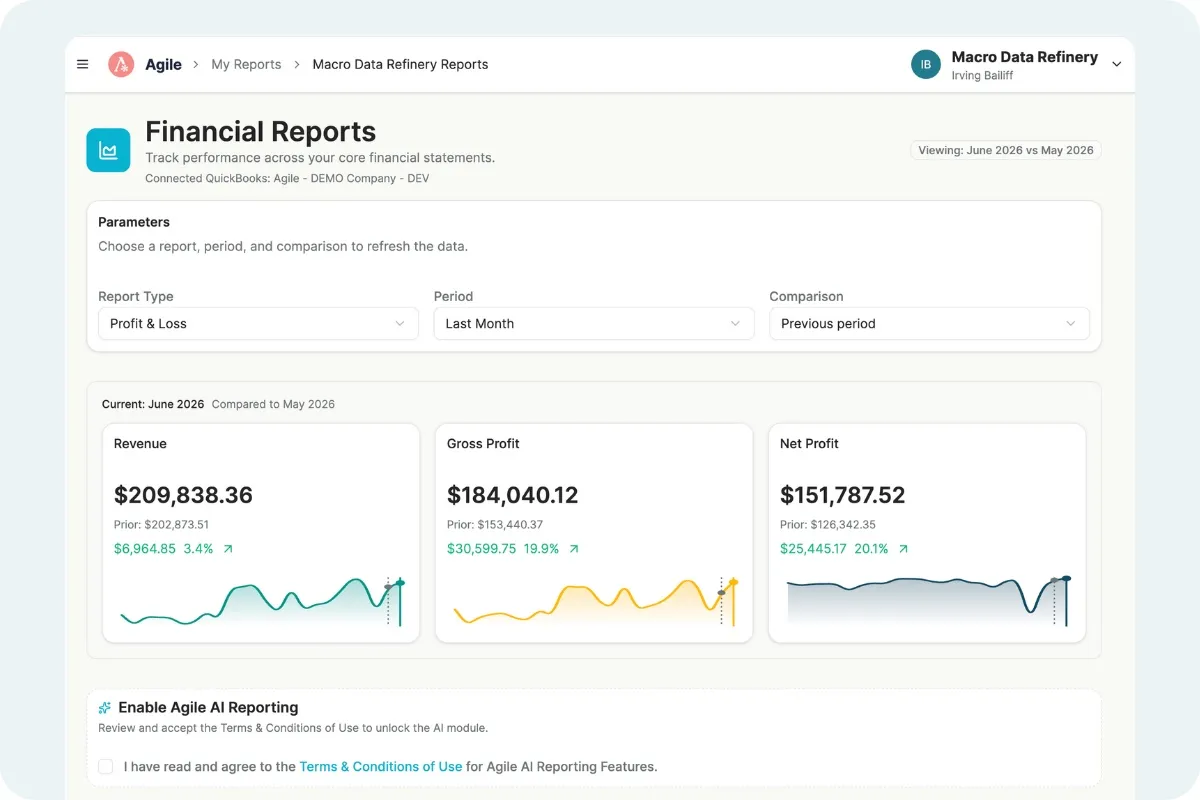
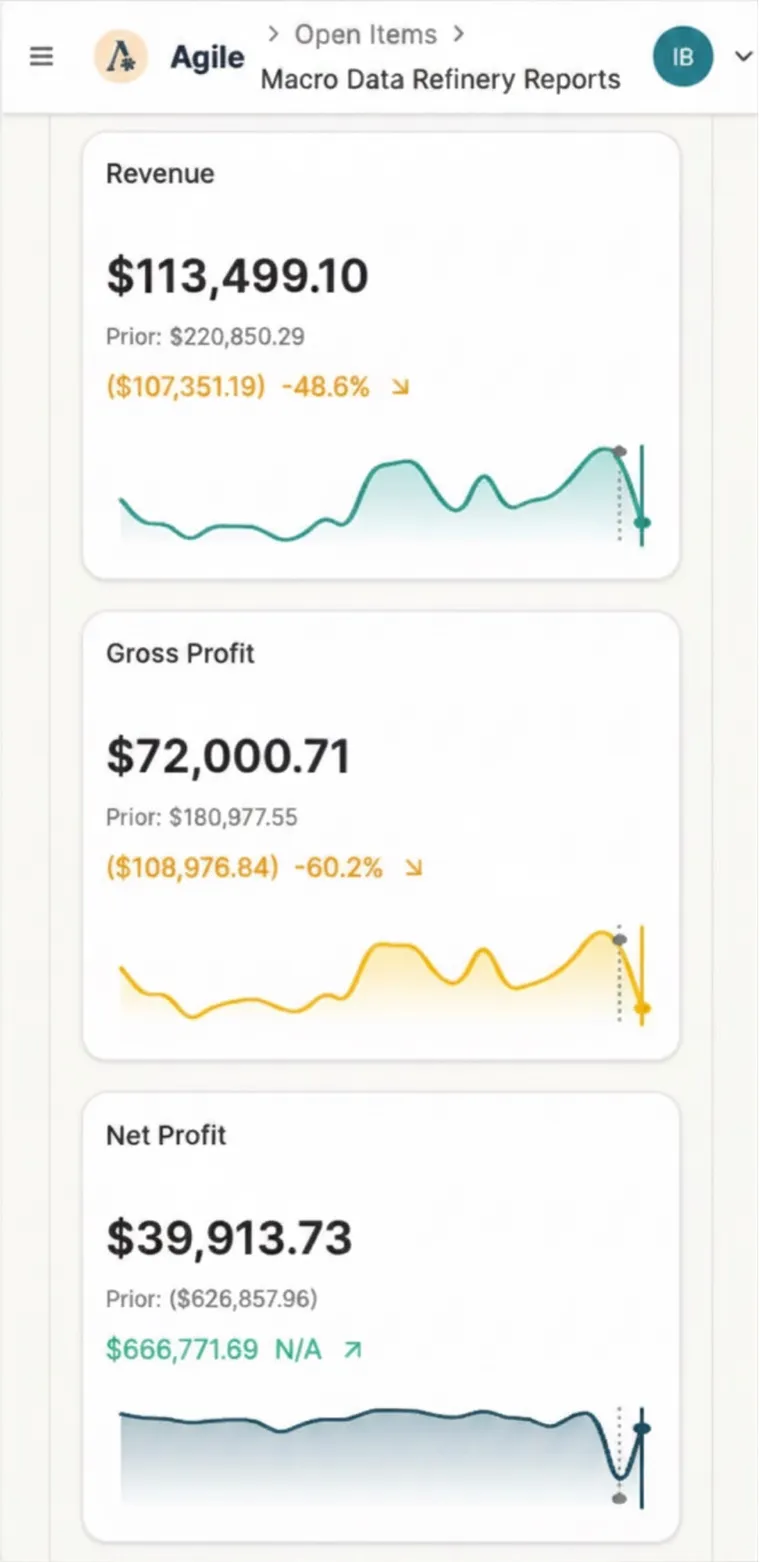
Being able to have weekly, up-to-date financials means everything when you are trying to make decisions in a business.
Questions people also ask
- What is basic bookkeeping for a small business?
- Basic bookkeeping is recording every sale and expense, sorting each into a category, keeping the document behind it and reconciling your accounts every month.
- What does business bookkeeping include?
- Business bookkeeping includes four things: transactions categorized, accounts reconciled, documents organized and reports ready for decisions.
- How long do I have to keep business records in Canada?
- Generally, six years from the end of the last tax year the records relate to, according to the Canada Revenue Agency. There are exceptions, and you need the CRA’s permission to destroy records early.
- What is the difference between cash and accrual accounting?
- Cash accounting records money when it moves, and accrual accounting records it when it is earned or owed. Ask your year-end accountant which one your business should use.
- What does reconciling mean in bookkeeping?
- Reconciling means matching your books to your bank and card statements, so the two agree.
- When should a small business get bookkeeping help?
- When reports are late, books are behind, transactions are piling up, or you’re spending too much time on admin instead of running the business.
- Will I still have to manage my own books?
- No. We run your bookkeeping. Your part is the source documents and a few answers.
This article provides general educational information. It is not financial, tax or legal advice for a specific business.
Agile is a Canadian, CPA-led bookkeeping firm for owners and nonprofits, working since 2018. CPAs manage the team and oversee the quality of your books.





A 100% Canadian team of accounting experts.